
Insights
J.S. Held Strengthens Forensic Accounting Expertise for Marital and Commercial Disputes with Acquisition of Forensic Accountants & Consultants
Read MoreThis series examines the multifaceted impacts of evolving tariff and trade policies. By delving into the nuances of these policies, we aim to provide valuable insights and perspectives that will inform strategic business decision-making and foster resilience in an increasingly volatile global market. Future pieces in this series will explore the specific implications for key sectors such as agriculture, energy, and construction, offering targeted analysis and recommendations to help businesses navigate and thrive amidst the changing tariff environment.
To explore how J.S. Held experts can contribute to your stories or events around the impacts of tariffs, please contact [email protected].

Boards of directors globally are confronting unknown circumstances as a result of the current quickly shifting tariff and trade environment. Business risks and opportunities are magnified during such times, compelling boards to seek the right strategies in order to meet these challenges.
In the video below, Brian Gleason, John Peiserich, James E. Malackowski, and Mariano de Alba – experts in business turnaround, supply chain, intellectual property, and political risk – outline emerging considerations for boards of directors in light of changing tariff policies.

Unprecedented uncertainty brought on by quickly evolving tariff policies is creating challenges and additional considerations for investors and other capital providers. Different countries will have different tariffs, resulting in major impacts to due diligence for acquisitions, capital projects, intellectual property rights, and supply chains.
In this video, Brian Gleason, John Peiserich, James E. Malackowski, and Tom Burns – experts in turnaround, supply chain, intellectual property, and political risk – discuss the issues investors should be aware of in this era of shifting tariff policies.

Companies around the world are facing increasing uncertainty brought on by the unpredictable and rapid shifts in tariff policies. As a result, corporate leaders are seeking ways to adapt and respond to the sudden and unprecedented changes in the international trade landscape.
In this video, Brian Gleason, John Peiserich, James E. Malackowski, and Livia Paggi – experts in turnaround, supply chain, intellectual property, and political risk – discuss key strategies for senior management teams to address evolving tariff policies.
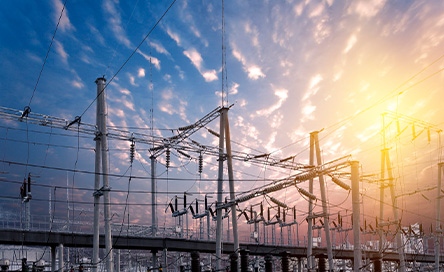
The new tariff environment is emerging as a central influence on the global energy marketplace. The unpredictable and rapid shift in tariffs introduces layers of complexity to energy production, commodity pricing, and macroeconomic conditions – which may also trigger significant cost increases, delays, or contractual disputes.
Construction advisory, global investigations, and supply chain experts Reza Nikain, Karyl Van Tassel, and Andrea Korney explain how proactive planning, sourcing, and modeling are essential for energy companies in this environment, utilizing a case example to outline step-by-step strategies for managing tariff uncertainty.
Read Article >>
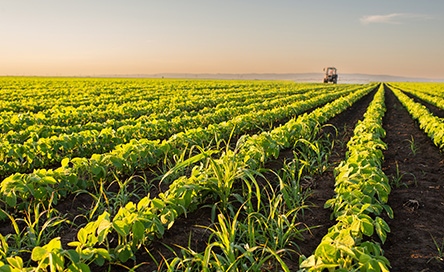
With much evolving information currently surrounding tariffs, sectors and markets around the world are facing uncertainty in how to adapt and respond to sudden changes in the trade landscape.
Sue Goll, David Kieffer, and Andrea Korney discuss the impacts of tariffs specifically on agricultural operations and related markets, addressing key questions such as:

For owners, contractors, and suppliers in the construction industry, the new US and retaliatory tariffs will likely add a number of risks at both the project and corporate level. These risks may include added costs, delays in schedules, supply chain disruptions, lower margins, and a potential increase in contractual disputes and litigation.
Construction advisory expert Rob Strahle provides real-time project management solutions to mitigate both the short-term and long-term risks posed by the uncertain and evolving global tariff landscape.

For the construction and insurance industries, uncertainty surrounding the fluctuating US tariffs and retaliatory tariffs from trading partners could have a significant impact on construction claims. Tariffs and trade tensions may also contribute to increased litigation and disputes between construction firms, suppliers, and developers.
Construction, insurance, economic, and supply chain experts Timothy Gillihan, Andrea Korney, Rob Strahle, and Katie Twomey explore the potential risks and opportunities that the evolving tariff policy and responses may have for companies seeking to adapt to these shifts in ways that ensure compliance, secure financial stability, and achieve long-term success.

With the sweeping April 2nd tariff announcement, US trade policy has entered a new phase – one where national security, economic leverage, and regulatory unpredictability intersect. Businesses are now navigating not just targeted tariffs, but a universal cost layer that touches nearly every sector. The urgency to adapt through exemption strategies, supply chain restructuring, and trade compliance has never been greater.
Sustainability and supply chain expert Andrea Korney discusses the challenges and opportunities presented by the potential effects of the new US tariffs on the global trade landscape.
How new legislation, resulting litigation, and changing tariffs and supply chains make it difficult to anticipate or plan for the overall direction of markets....
Our experts discuss direct China sanctions and “proxy risk” for sanctions from the third-party ties a Chinese firm may have to sanctioned entities....
J.S. Held’s Global Risk Report explores the most influential topics presenting global business risk and opportunity to help clients anticipate, adapt, and advance in 2025. ...