Areas of Expertise

Artificial Intelligence (AI)

J.S. Held Strengthens Forensic Accounting Expertise for Marital and Commercial Disputes with Acquisition of Forensic Accountants & Consultants

Read More close Created with Sketch.

AI is changing not only how organizations operate, but also how incidents occur, losses develop, claims are evaluated, and disputes are resolved.

AI may be the central issue in a dispute, one contributor in a complex causal chain, embedded within a product or physical system, or the reason new infrastructure is being constructed. When questions arise, stakeholders must understand what happened, how AI or its supporting systems affected the outcome, who bears responsibility, and what financial impact resulted.

J.S. Held answers each of these questions through one coordinated engagement, combining technical, scientific, and financial expertise to help legal counsel, insurance professionals, corporations, and other stakeholders investigate, quantify, and resolve complex AI-related claims and disputes.

J.S. Held Expertise for AI-Related Insurance Claims and Legal Disputes

Areas of Expertise: AI Disputes

AI disputes involve technology that must be explained, economic value that must be measured, and evidence that must be defended. J.S. Held supports litigation and disputes involving generative AI, machine learning, computer vision, natural language processing, agentic AI, robotics, AI governance, training data, model behavior, licensing markets, intellectual property, and damages.

Our experts analyze system logs, prompts, model versions, integration telemetry, training data provenance, failure modes, market impact, lost profits, unjust enrichment, reasonable royalties, IP value, and related harms. The result is technical clarity, financial analysis, and courtroom-ready support for counsel and clients dealing with AI systems that do not fit traditional software-dispute playbooks.

Explore AI Disputes >

Areas of Expertise: AI Infrastructure Disputes

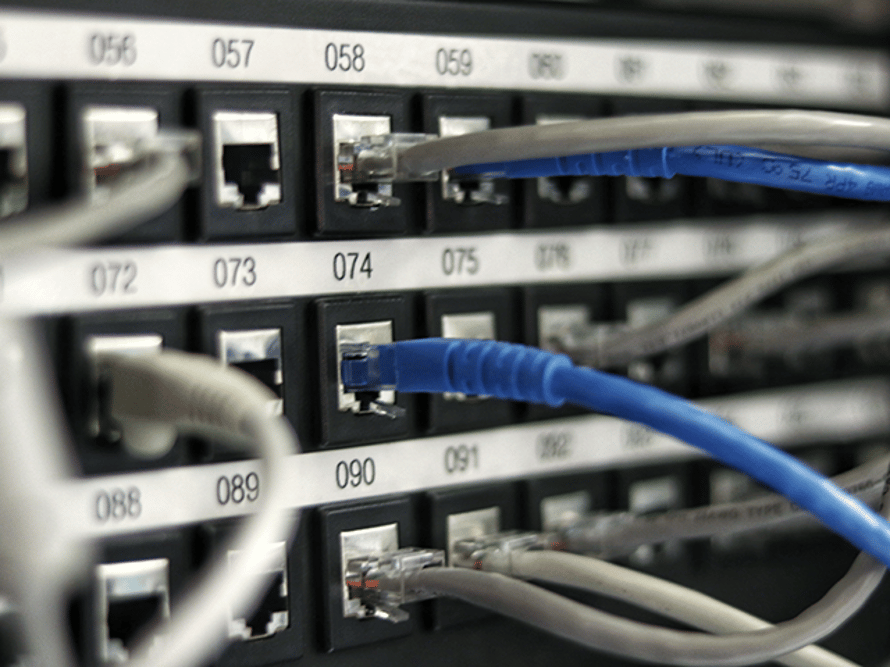
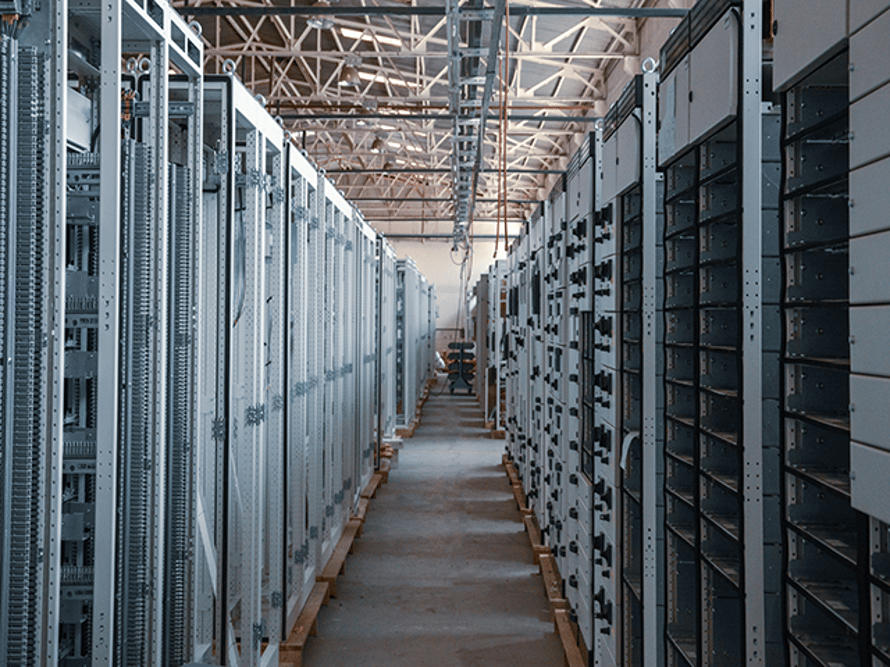
AI infrastructure disputes emerge where advanced computing systems intersect with the physical infrastructure required to support them. Because AI operations depend on highly interconnected facilities, equipment, power systems, environmental controls, construction activities, and digital technologies, disruptions often extend beyond a single failure and can create complex questions of causation, responsibility, financial impact, and recovery.

J.S. Held helps clients understand what happened, how impacts propagated across connected systems, and the resulting operational and financial consequences. By integrating technical, engineering, construction, environmental, and financial expertise, we provide the clarity needed to evaluate losses, quantify damages, and resolve disputes arising from the development, operation, and performance of AI infrastructure.

Explore AI Infrastructure Disputes >

Areas of Expertise: AI in Insurance Claims

AI is increasingly embedded within the systems, processes, and decisions that shape how losses occur and how organizations respond to them. As a result, AI may influence causation, severity, duration, liability, recovery, or damages even when it is not identified as a factor at first notice of loss.

J.S. Held helps insurers, counsel, and other stakeholders determine whether AI influenced the event at issue, assess its role alongside human and system actions, and evaluate the resulting operational and financial consequences. Our multidisciplinary teams provide the technical, forensic, engineering, and financial analyses needed to support claim evaluation, dispute resolution, and risk management decisions.

Explore AI in Insurance Claims >

Areas of Expertise: Physical AI Disputes

Physical AI disputes arise when AI-enabled systems act in the physical world, including robots, autonomous and driver-assisted vehicles, drones, warehouse automation, AI-controlled building and process infrastructure, industrial equipment, medical or caregiving robotics, and autonomous machinery. When these systems fail, the resulting claim or dispute may involve injury, property damage, business interruption, product recall, regulatory response, subrogation, and litigation.

We help clients understand what the system perceived, decided, and did, how human decisions and system controls influenced the outcome, and what operational and financial consequences resulted. By integrating digital, engineering, forensic, and financial expertise within a single engagement, we connect machine behavior to real-world impacts, helping clients establish causation, assess responsibility, quantify losses, and resolve complex claims and disputes.

Explore Physical AI Disputes >

For additional information about our services and to help put you in touch with the appropriate expert across our global team, contact:

James E. Malackowski
View Bio
James E. Malackowski
Chief Intellectual Property Officer | Intellectual Property Practice Lead
Aubrey Shea
View Bio
Aubrey Shea
Executive Vice President | Forensic Accounting – Insurance Services Practice Lead
Scott Armstrong
View Bio
Scott Armstrong
Executive Vice President | Equipment Practice Lead
Mark Cohen
View Bio
Mark Cohen
Senior Managing Director | Global Construction Advisory Services Practice Lead
Stephen Fenton
View Bio
Stephen Fenton
Executive Vice President | Accident Reconstruction Practice Lead
Rob Goodwin
View Bio
Rob Goodwin
Executive Vice President | Forensic Architecture & Engineering Practice Lead
John Peiserich
View Bio
John Peiserich
Executive Vice President | Environmental, Health & Safety Practice Lead
Andrew Ross
View Bio
Andrew Ross
Executive Vice President | Building Consulting Practice Lead
Richard Sexton
View Bio
Richard Sexton
Executive Vice President | Surety Practice Lead
Katie Twomey
View Bio
Katie Twomey
Executive Managing Director | Builder’s Risk (CAR/EAR) Practice Lead
David Weiner
View Bio
David Weiner
Executive Vice President | Economic Damages & Valuations Practice Lead
JP Brennan
View Bio
JP Brennan
Senior Managing Director, Advanced Technologies
Mike Gaudet
View Bio
Mike Gaudet
Senior Managing Director, Digital Investigations & Discovery

Frequently Asked Questions

What is an AI-related claim or dispute?

An AI-related claim or dispute is a matter in which an AI model, output, decision, product, supporting system, or infrastructure may be relevant to causation, liability, ownership, value, loss, or damages. AI may be the principal subject of the dispute or one component within a broader chain of events.

What types of AI matters does J.S. Held address?

J.S. Held addresses four connected areas: disputes centered on AI technologies and assets; disputes involving the infrastructure supporting AI computing; insurance claims in which AI may have affected a loss; and physical incidents involving AI-enabled machines or autonomous systems.

How does J.S. Held help clients address AI-related claims and disputes?

When artificial intelligence contributes to an incident, loss, claim, or dispute, J.S. Held brings together technical and financial expertise to determine what happened, why it happened, who or what may be responsible, and what financial impact resulted.

Reconstructing the event
We identify the relevant sequence of AI outputs, system actions, data handoffs, human decisions, controls, physical events, and downstream consequences.

Preserving and analyzing the evidence
Our experts evaluate available digital and physical evidence, which may include prompts, outputs, logs, model versions, telemetry, configurations, operational records, equipment, materials, financial information, and witness evidence.

Establishing causation and responsibility
We assess whether a matter involved model behavior, system integration, infrastructure failure, equipment performance, inadequate controls, human reliance, third-party dependencies, or a combination of contributing factors.

Quantifying financial impact
Our financial experts evaluate business interruption, extra expense, lost profits, remediation costs, reasonable royalties, unjust enrichment, intellectual property value, economic damages, and other consequences relevant to the matter.

Communicating defensible findings
We integrate technical, scientific, investigative, and financial analysis into a coherent expert narrative for claims resolution, litigation, arbitration, mediation, regulatory proceedings, and expert testimony.


What are potential signals for when AI expertise is needed?

AI expertise may be needed when:

  • An AI model, output, training dataset, or automated decision is being challenged.
  • An AI-enabled tool, workflow, product, or system may have contributed to a loss.
  • A dispute involves the value, ownership, licensing, or alleged misuse of AI-related intellectual property.
  • An insurer, board, or legal counsel is asking about AI controls.
  • Employees are putting confidential material into AI.
  • A data center or other AI computing environment experiences construction delay, power disruption, cooling failure, equipment damage, contamination, or operational interruption.
  • An autonomous vehicle, robot, drone, intelligent product, or automated system causes injury, property damage, or business interruption.
  • Relevant evidence includes prompts, model versions, system logs, telemetry, sensor data, decision records, or AI-generated content.
  • Prompt, model, software-version, or system history has been lost, altered, or overwritten.
  • A company is unsure of which AI models or datasets they own.
  • A transaction, claim, or dispute involves a company with proprietary AI.
  • A competitor suddenly has a similar AI feature.

Why is integrated technical and financial expertise important in AI-related claims and disputes?

Integrated technical and financial expertise is needed because understanding how an AI system behaved is only part of determining the full impact of an incident, loss, claim, or dispute. Technical analysis can help establish what happened, how the technology and connected systems operated, and where failures or human decisions contributed to the outcome. Financial analysis connects those findings to business interruption, lost profits, remediation costs, intellectual property value, and other economic consequences. Bringing these disciplines together creates a clearer, more consistent, and defensible assessment of causation, responsibility, and damages.

Still have questions?

Contact Us

Related Insights

Our insights cover a variety of topics impacting businesses, society, the economy, and the environment. Check out our latest white papers, research reports, educational seminars, industry speaking engagements, and perspective articles.


Featured Engagements

 
INDUSTRY INSIGHTS
Keep up with the latest research and announcements from our team.
Our Experts