This article was originally published in Environmental Business Journal, Volume 39 Numbers 9/10: Q3 2026: Data Centers.
Publication Date: November 5, 2026
Insurance claims executives, adjusters, coverage professionals, and carrier counsel managing complex environmental, property, pollution, and catastrophe claims, as well as law firm partners and attorneys handling environmental litigation, insurance disputes, toxic torts, energy matters, regulatory proceedings, and complex commercial disputes should read this article to learn more about:
Why environmental contamination and catastrophe losses are making insurance claims more complex.
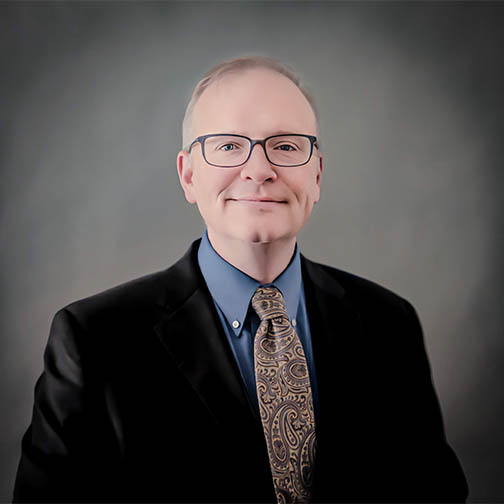
John draws on more than 30 years as an environmental attorney and expert witness to examine how specialists across scientific disciplines translate complex evidence for juries. Through these cross-disciplinary conversations, John highlights the shared practices that make technical testimony clear, credible, and respectful.
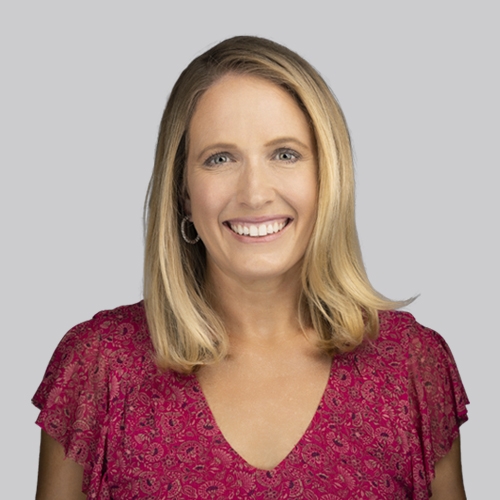
Jessica brings a digital transformation and enterprise technology perspective to explain how AI can strengthen expert-led services through disciplined governance, workforce enablement, and responsible adoption while preserving professional judgment, independence, and accountability.
Executive Summary
This Environmental Business Journal Q&A explores how J.S. Held is expanding its EHS platform to address increasingly complex environmental risks across insurance claims, litigation, catastrophe response, regulatory compliance, corporate risk, energy infrastructure, and data center development. John Peiserich explains that reactive engagements for insurers and legal counsel remain the primary drivers of demand, with environmental issues becoming more consequential as smoke, soot, hazardous materials, soil and groundwater contamination, and other exposures create costly questions that require defensible scientific and financial analysis. The discussion highlights the acquisition of Clark Seif Clark, which expands J.S. Held’s West Coast capabilities in industrial hygiene, environmental engineering, regulatory expertise, and catastrophe response, while strengthening its national EHS platform. It also addresses growing demand for proactive lifecycle advisory services as corporations increasingly evaluate EHS considerations as enterprise risks before capital projects proceed. Data centers and energy infrastructure are emerging as significant growth areas, particularly in brownfield redevelopment, ongoing facility compliance, power-generation expansion, and related claims and disputes. Throughout, Peiserich emphasizes reproducible analytical methods, transparent documentation, QA/QC, chain-of-custody protocols, multidisciplinary expertise, and analysis capable of withstanding scrutiny from regulators, insurers, counterparties, and courts. Jessica Larson adds a complementary perspective on AI, describing a governance-led approach designed to enhance expert capabilities while preserving professional judgment, independence, security, and accountability.
Environmental Business JournalQuestions for J.S. Held on CSC Acquisition, EHS Capabilities, Insurance Claims, Power Demand and Data Centers
Q: How does J.S. Held define its core client base today across insurance carriers, legal counsel, corporations, government agencies, and financial stakeholders, and which client groups are driving the strongest growth in EHS services?
A: J.S. Held’s core client base is insurance carriers and legal counsel with select corporate partners. The biggest drivers for growth are reactive engagements for the insurance and legal markets. Our 50+ years of serving insurance clients anchor J.S. Held and have provided a strong core client base for our Environmental, Health & Safety (EH&S) Practice.
Q: Within J.S. Held’s Science & Technology and EHS practices, which services are most in demand—industrial hygiene, environmental site assessment, remediation planning, regulatory compliance, expert witness support, catastrophe response, claims analysis, or litigation-driven technical consulting?
A: Reactive engagements are the most in-demand services for the EH&S Practice individually, and the Science & Technology Division as a whole, which includes our Accident Reconstruction Practice. The areas you mention are all areas where EH&S is routinely engaged. Our Industrial Hygiene & the Built Environment, Health Sciences, Liability Assessment, Management and Remediation, and Environmental & Risk Advisory services each support claims consulting and expert witness support along with traditional advisory services. The intersection of technical expertise and financial impact is where J.S. Held provides tremendous value and generates the greatest demand.
Q: What made Clark Seif Clark an attractive acquisition target, and how does CSC expand J.S. Held’s industrial hygiene, environmental engineering, and West Coast response capabilities?
A: The team at Clark Seif Clark (CSC), led by Franco Seif, is just amazing. EH&S is thrilled to have them join us. CSC was so attractive because of the two things that make EHS companies successful: first, the team was highly competent technically, and second, it had wonderful client relationships based on excellent work and timely delivery. Because CSC is highly knowledgeable, particularly in Arizona and California regulatory schemes, it was an easy decision to strike the deal.
CSC immediately expanded our West Coast capabilities for industrial hygiene and environmental engineering. By providing local expertise, it allows CSC to leverage almost ten times more experts, including unique expertise previously unavailable to CSC, throughout the EH&S Practice and bring a much larger team to bear on individual problems, or on broader regional issues such as the recent wildfires. For J.S. Held, CSC provided deep knowledge of the local regulatory schemes that clients depend on us for daily.
Q: How are environmental and industrial hygiene issues becoming more central to complex insurance claims involving property damage, wildfire smoke, water intrusion, mold, asbestos, hazardous materials, chemical releases, or catastrophic events?
A: If you read the risk reports published by various insurance companies, you will see that catastrophic environmental issues are highly ranked among the greatest risks presented today. The January 2025 California wildfire losses have been estimated at up to $40 billion. The losses are incredibly expensive, subject to a high degree of scrutiny, and increasingly complex in nature.
Years ago, a fire loss was just a question of whether or not the structure burned. Today, a total loss is an easy decision. Our industrial hygienists and other experts are called upon to address contamination from smoke infiltration, soot and char deposition, and a wide variety of combustion byproducts. We are asked to interpret contamination that is invisible, unevenly distributed, and easy to misinterpret. Ultimately, the work we do has to withstand real scrutiny either in an appraisal or litigation.
Questions around fate and transport, clean-up costs, and traditional “dirty dirt” contaminated soil and groundwater are the same. Regardless of the environmental lens, reactive engagements require EH&S to bring in multidisciplinary expertise to address why it happened, when it happened, how to remedy the problem, and what it will cost. At the end of the day, environmental issues are becoming more central to claims because of the associated costs and the need for defensible results.
Q: The release emphasizes faster local response on the West Coast. How important is regional field presence in claims-related environmental work, and where else does J.S. Held see geographic gaps or expansion opportunities?
A: Regional field presence will always be important for environmental work, whether claims-related or not. Regional field presence helps in three primary areas. Some of the work is regulated, so the question arises: do we have the necessary licensure to perform it? Second, claims are time-critical. Conditions change over time, and quicker diagnostic work can help control costs. Finally, local knowledge and relationships drive the market. Clients want to hire people who can be there quickly, hold the relevant license, and know the requirements. Right now, we see expansion opportunities in Texas, Georgia, and the Midwest. We have teams in all three, but we see strong demand for more support.
Q: How will CSC’s environmental consulting capabilities be integrated with J.S. Held’s broader technical, scientific, financial, forensic, and strategic advisory services?
A: This is probably my favorite subject: how do we leverage our expertise across services? CSC brings substantial technical and West Coast-specific regulatory expertise to support client decision-making across J.S. Held’s services. A great example is the support we offer clients through our turnaround services. EHS risk is a common concern for companies that are restructuring. Board members want assurance that EHS risks are being managed appropriately, that regulatory requirements are being met, and that safety, in particular, is being ensured. CSC, in conjunction with others within the EH&S Practice, can provide the integrated, multidisciplinary support companies are seeking today.
Q: J.S. Held often works in high-stakes matters where findings must withstand scrutiny from courts, regulators, insurers and counterparties. How does that shape the firm’s approach to data quality, documentation, expert analysis and risk communication?
A: I’ll start with the last: how is risk communication handled within J.S. Held? That is easy; we deliver the news. Everyone at J.S. Held delivers independent, data-informed analysis. We stick to facts, acknowledge any limitations, and tie our conclusions to the data.
Everything we do has to be defensible, whether reactive or proactive work. While a counterparty may not bring a Daubert challenge, breaching their trust is just as bad. As a result, data quality has to be irreproachable. Data has to have well-documented QA/QC and chain-of-custody protocols. Analysis has to comply with recognized standards. For example, in recent reporting, we referenced an internal supporting document; when the regulatory agency asked questions about it, the EH&S team provided the entire Mann-Kendall trend analysis, no hiding the ball.
Every client should hold J.S. Held to deliver a reproducible analytical method. The work is peer-reviewed and transparent. By ensuring the data is accurate, that the documentation builds a solid record, and that a solid QA/QC program is followed, the EH&S Practice makes work defensible and capable of withstanding critical review by others.
Q: Are climate-related events—wildfires, floods, hurricanes, extreme heat, indoor air quality impacts, and infrastructure failures—materially increasing demand for environmental health, industrial hygiene, and claims-support services?
A: You’ve asked about catastrophic climate-related events just as major flooding has been reported in Nepal while the US Gulf Coast is forecast for a below-normal hurricane season. Overall, yes, J.S. Held has seen strong demand for environmental health, industrial hygiene, and claims-support services due to climate-related events over the past several years. We are also seeing highly variable regional climate-related impacts. For example, our forensic meteorology team has seen a significant uptick in claims assignments in Texas over the last several years. I think some of the reasons for increased demand are the need for defensible decision-making. It goes back to the increased sophistication of claims and the need to make technically backed decisions.
Q: Beyond insurance claims, are corporate clients increasingly using J.S. Held for proactive EHS compliance, risk assessment, due diligence, and resilience planning?
A: Yes. We are seeing increased demand for lifecycle advisory services. Corporate clients are increasingly seeking to identify potential issues before harm occurs and before incurring significant financial and reputational damage. Corporate clients are looking at capital projects more holistically. They want to know all the risks before they start, not just address waste management, for example, after the project is 90 days into operation. Resilience planning is a great example in which the intersection of technical expertise and financial impact is driving corporate clients to treat more traditional EHS activities as enterprise risk management considerations. Clients are coming to J.S. Held expecting us to deliver EH&S advisory services from that perspective.
Q: How is rising power demand from electrification, industrial growth, grid constraints, data centers, and distributed energy affecting J.S. Held’s clients and the types of risk, claims, compliance, or advisory work they require?
A: The growing demand for power has a wide variety of impacts. The most complex issue is how to plan for the future. Clients can only see parts of the overall picture right now. For example, data centers are growing so rapidly and with highly variable jurisdictional requirements that it is difficult to predict future grid constraints. Corporate risk and advisory work is heavily affected by planning complexity because it is forward-looking. Claims are, for the most part, less complicated because that work is reactive. However, we are seeing more claims due to rising power demand and the resulting installation of additional generating facilities. The continued development of both solar and, to a lesser extent, wind generating facilities is driving claims work.
Q: Are data centers becoming a meaningful client category for J.S. Held, either directly or through insurers, developers, lenders, utilities, legal counsel, or contractors?
A: Data center-related work is a growing client category. Reactive engagements through insurance or counsel account for the largest share of the category. A growing category is brownfield redevelopment work. We are seeing more and more assignments related to the redevelopment of historic industrial facilities with long-tail environmental liabilities. In many of those projects, we are asked to assist in addressing those liabilities while ensuring that the data center can be constructed and operate “business as usual.” It allows J.S. Held to apply its industrial hygiene, health sciences, remediation, and risk advisory expertise all in a single project.
Q: What environmental and technical issues are most common in data center-related engagements—backup generation air permitting, fuel storage, water use, cooling systems, construction defects, fire/life safety, indoor air quality, power reliability, noise, hazardous materials, or claims from outages and equipment failures?
A: The categories above are definitely all items we routinely encounter. For completed data centers, we are seeing more concerns about ongoing compliance obligations. Many of the facilities have small staffs with individuals wearing more than one hat. The maintenance manager may also be responsible for all EHS functions. Day-to-day safety, routine permit renewals, stormwater, and, of course, noise are the most common questions that arise.
Q: As utilities and large power users invest in transmission, substations, backup generation, and on-site energy systems, is J.S. Held seeing more disputes or claims involving energy infrastructure performance, environmental compliance, or catastrophic failure?
A: Yes, and not just within our EH&S Practice. Across the board, J.S. Held is seeing more claims and disputes because of the ongoing energy investments. Every claim/dispute needs both technical expertise and damage calculations.
Q: What types of professionals are hardest to recruit and most important to growth—certified industrial hygienists, environmental engineers, toxicologists, claims specialists, forensic engineers, regulatory experts, construction consultants, or expert witnesses?
A: Testifying experts are the hardest to develop regardless of their area of specialization. Lawyers are risk-averse, so getting the first chance to testify is difficult. Because a testifier needs to get over the initial hurdle to be qualified as an expert “by knowledge, skill, experience, training, or education” in Federal Rule of Evidence 702 in order to present their specialized knowledge, you are seeking individuals with existing CVs, not fresh-faced graduates. They are all important once they reach the testifying stage.
Q: What is your approach?
A: J.S. Held's approach to AI is centered on enhancing expert capabilities while maintaining the professional judgment, independence, and accountability that clients rely upon. We are taking a disciplined approach to adoption through governance, workforce enablement, and targeted investment in high-value applications that can improve knowledge access, support analysis, and strengthen the delivery of expert-led services. We view AI as a long-term enterprise capability, not simply a technology initiative, and are focused on building the governance, skills, and operating models needed to support responsible adoption at scale. At the same time, we recognize that AI is creating new opportunities, risks, and operational challenges across industries. As organizations navigate these changes, we continue to leverage our multidisciplinary expertise to help clients understand and respond to the operational, regulatory, risk, and technology implications of AI and other emerging technologies.*
*Insights from Jessica Larson, Senior Vice President of Digital Transformation at J.S. Held.
Q: Should the CSC acquisition be viewed as part of a broader strategy to build a national environmental health, safety, and claims-support platform, and what additional capabilities would strengthen that platform over the next several years?
A: Absolutely. CSC is a great example of the kind and quality of firms that J.S. Held will continue to acquire. As we grow and expand our national platform, J.S. Held will continue to develop the deep scientific and technical expertise to support insurance, legal, and corporate clients. The EH&S Practice will continue to strengthen its bench geographically in areas such as Texas, Georgia, and the Midwest. We will also continue to seek strategically adjacent expertise and expand our industrial hygiene, health sciences, assessment and remediation, and risk advisory teams, with an emphasis on senior testifiers.
Acknowledgments
The responses above are provided by John Peiserich, Executive Vice President and Environmental, Health & Safety Practice Lead, and Jessica Larson, Senior Vice President of Digital Transformation at J.S. Held.
About J.S. Held’s Contributors
John Peiserich is an Executive Vice President and Environmental, Health & Safety Practice Lead who specializes in environmental risk and compliance. With over 30 years of experience, John provides consulting and expert services for heavy industry and law firms throughout the country with a focus on Oil & Gas, Energy, and Public Utilities, including serving as an expert witness in arbitration proceedings and in state and federal courts. He has extensive experience evaluating risk associated with potential and ongoing compliance obligations, developing strategies around those obligations, and working to implement a client-focused compliance strategy. Mr. Peiserich has appointments as an Independent Monitor through EPA’s Suspension and Debarment Program. John routinely supports clients in a forward-facing role for rulemaking and legislative issues involving energy, environmental, Oil & Gas, and related issues.
Jessica Larson is a Senior Vice President of Digital Transformation at J.S. Held and a senior executive leader in digital transformation, artificial intelligence, and enterprise technology strategy, with nearly 20 years of experience driving business value across complex, regulated industries. At J.S. Held, Jessica serves as a strategic partner across the firm, leading efforts to enable the responsible and scalable use of digital and AI technologies to enhance client delivery, drive adoption, and improve how work is performed across both professional services and corporate functions.
The exact number of brownfield sites in the United States is not known. Some sources estimate the number at more than 450,000, amounting to more than five million total acres of land. One report estimated...
Due to their specialized function—housing energy intensive IT equipment and 24/7/365 operations—data center facilities often consume over 100 (10 to 50 per floor space1) times the quantity of electricity of a similarly sized commercial office...