Disclosure:This article was originally published in the June 2026 issue of the Journal of Corporate Renewal and is republished with permission.
Restructuring and insolvency professionals should read this article to:
Understand how current macroeconomic conditions (interest rates, inflation, capital constraints) are driving increased distress and reshaping engagements.
Learn that artificial intelligence (AI) and emerging technologies are influencing workflows, reporting, and decision-making in turnaround environments.
Gain insight into how evolving capital providers (e.g., private credit) are changing expectations and engagement dynamics.
Private equity, lenders, and private credit professionals should read this article to:
Recognize the shift toward multidisciplinary restructuring, requiring coordination across financial, operational, and legal functions.
Evaluate why execution capability and real-world experience are becoming more critical.
Realize that professionals with certified designations from the Turnaround Management Association have a base level of management, finance and accounting, and legal knowledge.
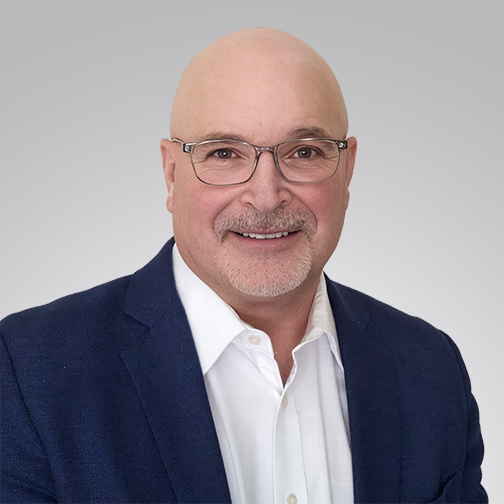
Brian draws on nearly three decades of experience and 300+ turnaround engagements to show how today’s restructuring challenges require multidisciplinary judgment across capital markets, geopolitics, and operations. Highlighting that success depends on early recognition of signals, sharp questioning, and strong networks amid uncertainty.
Introduction
The conversation around restructuring has changed. For much of my career, distress was usually triggered by familiar forces: overleverage, expense mismanagement, pricing pressure, execution missteps, or cyclical downturns. Today, those factors still matter, but they are increasingly compounded by swiftly changing capital markets, geopolitical fragmentation, trade volatility, regulatory divergence, and supply chain shocks that move faster than traditional planning cycles. Add in AI—the result is not episodic disruption, but persistent uncertainty.
In this environment, resilience is no longer just an operational concept or a balance-sheet outcome. It is a leadership capability, one that depends heavily on judgment, experience, and access to the right perspectives at the right moment.
This is where I believe the Turnaround Management Association, along with our certifications—the Certified Turnaround Professional (CTP) and Certified Turnaround Analyst (CTA)—have never been more relevant.
Restructuring Is Now a Multidisciplinary Sport
Modern turnarounds rarely stay confined to one discipline. A restructuring professional today must understand not just liquidity and capital structure, but supply chain concentration risk, tariff exposure, geopolitical dependencies, regulatory change, insurance recoverability, and stakeholder signaling. Familiarity with legal concepts and capital markets are musts. Trends in appraisals and liquidations are mandatory knowledge. And there’s so much more to know—all at once and quickly.
No Individual, Regardless of Experience, Has All That Expertise In House
What distinguishes strong outcomes in this environment is not who has the best model, but who knows which questions to ask early and who to call when the answers are unclear. In my experience, the TMA community provides that connective tissue faster and more credibly than any single firm or advisory discipline acting alone.
TMA is one of the few places where operators, capital providers, advisors, attorneys, appraisers, liquidators, and a myriad of other professionals speak the same practical language. That is not accidental, it is earned through shared experience under stress.
The CTP as a Signal of Judgment Under Pressure
Certification separates those professionals who are dedicated long term to our industry from those that may just be dabbling. It ensures a base level of management, finance and accounting, and legal knowledge. CTPs are peer-vetted not only on what they know, but on what they have done, how they have led through uncertainty, and how they have exercised judgment when outcomes were genuinely at risk. In today’s environment where geopolitical shocks, policy reversals, and supply disruptions can materially alter a restructuring overnight—this distinction matters.
Boards and capital providers increasingly need advisors and interim leaders who can operate when assumptions break down. The CTP designation is a shorthand signal that someone has lived through complexity, navigated competing stakeholder interests, and understands how second- and third-order risks propagate across an enterprise.
Community as a Strategic Asset
One of the underappreciated benefits of TMA membership is how it accelerates pattern recognition.
When globalization fragments, risks stop behaving independently. Tariffs affect margins, which affect liquidity, which affect covenant headroom, which affect access to trade credit. Rinse, repeat in every area of a business. Connections are hard to see in isolation, but easier to recognize when you regularly exchange perspectives with professionals who are seeing different pieces of the same problem across industries and geographies.
TMA creates structured and informal venues where these exchanges happen before a situation becomes fully distressed, often at the stage where resilience can still be built instead of capital destroyed.
Raising the Standard in an Era of Uncertainty
Periods of systemic uncertainty tend to test professional standards. They can reward speed over rigor, confidence over competence, or expediency over long-term value preservation.
One of TMA’s quiet strengths is that it pushes in the opposite direction. Through the CTP program, thought leadership, and peer accountability, the organization reinforces the idea that restructuring is a profession, one with shared norms and a responsibility to steward value, not just transact it.
Why This Moment Matters
Uncertainty is the defining character of this time. Global connections that have been stable for decades are being rewired. Dispersion of outcomes between top companies in markets and other competitors is growing drastically. Capital is widely available, yet often hard to get. The winning turnaround and restructuring professionals in this next phase will not be those who try to know everything. Rather it will be those that build a network to rely on. It will be those that keep current on what is happening in all areas of the market and who can tap into the best thinking from TMA’s big tent of professionals—in your market and around the world. It will be those who commit to the industry long term.
Over this cycle, technical skills will be necessary but insufficient on their own. Judgment, perspective, and community matter more than ever. The CTA and CTP designations and active engagement in TMA are not credentials for a quieter past; they are tools for navigating a far more complex future.
Perhaps you question whether you have the time or desire to lean into certification or even attend TMA events. I ask, with the speed of change happening in our industry today, can you afford not to?
Acknowledgements
We would like to thank our colleague, Brian Gleason, CTP, and Global President of the Turnaround Management Association, for his insights and expertise in researching and writing this article.
Brian Gleason, CTP, is a Senior Managing Director in J.S. Held’s Strategic Advisory practice. He joined J.S. Held as part of the company’s acquisition of Phoenix Management Services. As a Certified Turnaround Professional (CTP) and the Global President of the Turnaround Management Association, Brian has managed or participated in more than 250 turnaround engagements over the past 28 years, using his executive, operational, financial, and negotiating skills. He has significant experience in interim management roles, including serving as CRO, CEO, COO, and CFO for sponsor-backed, privately held, and publicly reporting entities. He has been a board member in many companies, including private and public companies, and is often engaged in these roles when there is significant disruption in the company or at the board level. In certain circumstances, he represents capital providers directly to advise on operational and restructuring matters for their portfolio companies.
Experts in turnaround, supply chain, intellectual property, and political risk discuss key strategies for senior management teams to address in evolving tariff policies....
INDUSTRY INSIGHTS
Keep up with the latest research and announcements from our team.